
Industry
Startups, Others, Human Resources, SAAS
Technologies
.NET, Reactjs, Azure, OpenAI API, Docker
Customer
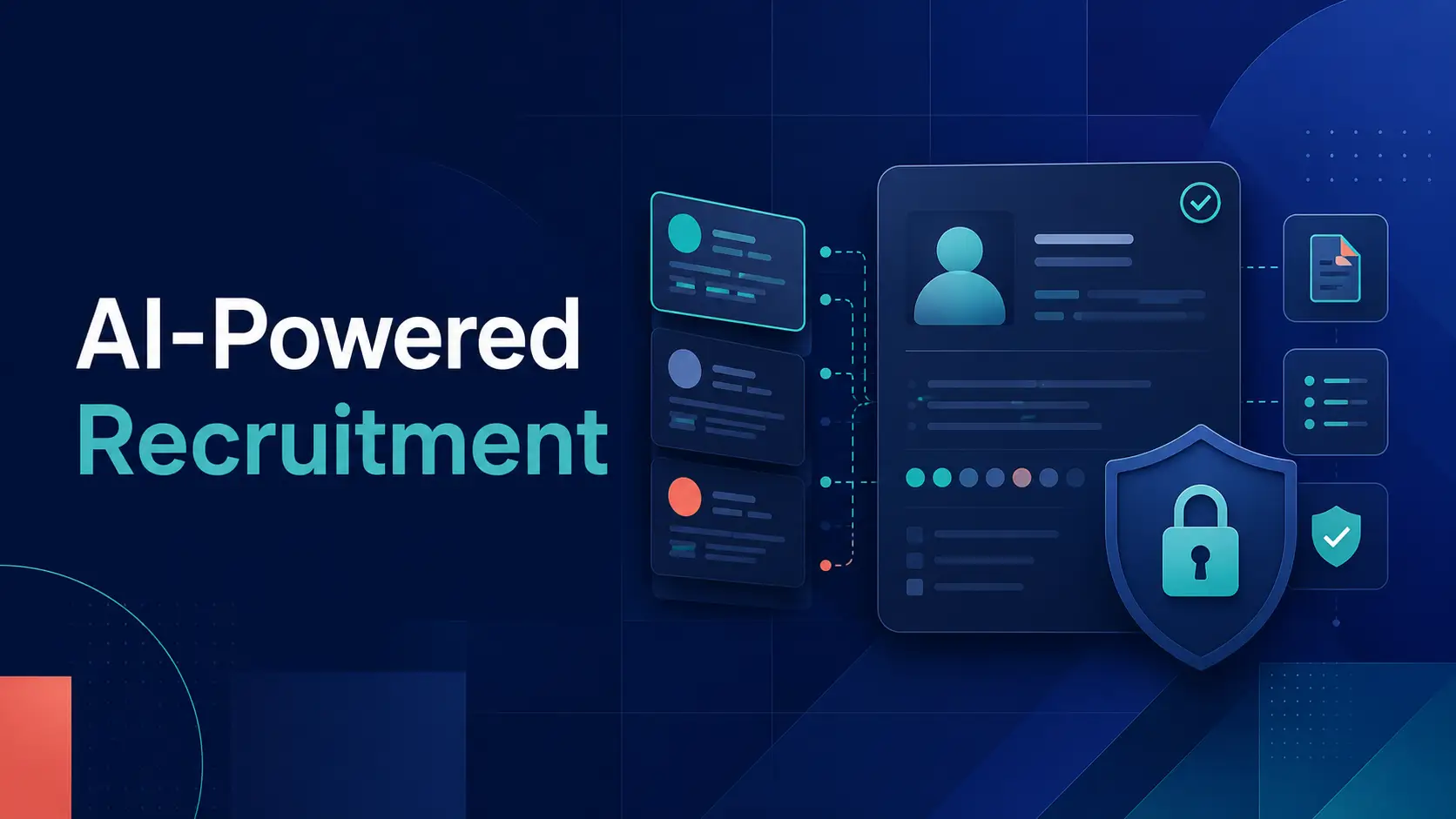
The customer needed a comprehensive HR management platform tailored for small to mid-sized businesses, covering the full employee lifecycle employee profiles, attendance, performance, recruitment, onboarding, incident tracking, training, and project/document management. Within the existing Recruitment module, the customer wanted to reduce the time HR teams spent manually reviewing resumes and improve the consistency of candidate shortlisting by introducing AI-powered resume screening and candidate matching.
Challenge
The AI implementation focused on making candidate screening faster and more consistent within the existing Recruitment module.
Some of the Key challenges of the project were:
- Manual resume review across large applicant volumes was time-consuming and inconsistent between reviewers.
- Resumes arrived in varied formats (PDF, DOCX, scanned images) and needed reliable parsing before any meaningful comparison could happen.
- Matching candidates to job requirements required understanding skills and experience contextually, not just keyword matching.
- The AI screening needed to integrate into the existing Applicant Tracking workflow without disrupting recruiter review and approval steps.
- Candidate and resume data is sensitive, so it needed to be handled securely and not exposed to third-party AI services beyond what was necessary.
- AI-generated match scores needed to be explainable so recruiters could understand and trust why a candidate was ranked a certain way.
- The system needed to remain usable and accurate even when AI scoring services were slow or temporarily unavailable.
Results
- Reduced the time recruiters spent manually screening resumes for each open position.
- Improved consistency in candidate shortlisting by applying the same AI-driven evaluation criteria across all applicants for a role.
- Gave recruiters explainable match summaries instead of a black-box score, increasing trust in AI-assisted shortlisting.
- Enabled recruiters to focus manual review time on top-ranked candidates rather than the full applicant pool.
- Maintained data privacy by limiting what candidate information was sent to the AI scoring service.
- Integrated AI screening into the existing Recruitment module without disrupting the broader HR platform or requiring a system rewrite.
- Created a foundation for extending AI capabilities to other HR modules, such as performance feedback and training recommendations.
Technologies
- React for the recruiter and applicant tracking interface
- .NET Core for backend APIs
- SQL Server for application data
- Entity Framework Core
- OpenAI for resume-to-job-description matching and summary generation
- NLP and text embeddings for semantic skill and experience matching
- Vector search for candidate-to-job similarity ranking
- Resume parsing engine for PDF, DOCX, and scanned document extraction
- Azure Blob Storage for resumes and supporting documents
- JWT authentication and Role-Based Access Control
- Serilog for application and AI request logging
- REST APIs for application and AI service integration
- GitHub Actions for deployment
Timeline: 8 Weeks
- AI Architecture & Data Flow Design: 1 weeks
- Resume Parsing Pipeline: 1.5 weeks
- AI Scoring & Candidate Matching Engine: 2 weeks
- Applicant Tracking Workflow Integration: 1.5 weeks
- Recruiter Review UI & Feedback Capture: 1 weeks
- Testing, Security & Production Deployment: 1 weeks
Suggested case studies
Discover how our expert solutions empower businesses and delight customers.

Ready to Build Something Amazing?
Get in touch with Prishusoft – your trusted partner for custom software development. Whether you need a powerful web application or a sleek mobile app, our expert team is here to turn your ideas into reality.
